
- California’s I-5, I-10, and I-15 corridors, plus the ports of LA/Long Beach, see disproportionately high truck inspection volume, and ABS lamp faults and air leaks are among the most commonly cited brake defects here.
- Mountain grades like the Grapevine and Cajon Pass put sustained extra load on brake systems, which means marginal components are more likely to trigger citations on California routes than on flat-terrain corridors elsewhere.
- A California CHP brake citation carries the same CSA Vehicle Maintenance BASIC weight as a national Brake Safety Week violation, so year-round California-specific prevention matters as much as the annual national campaign.
Table of Contents
California runs some of the highest commercial vehicle inspection volumes in the country, and its major freight corridors, I-5 through the Central Valley, I-10 and I-15 through the Inland Empire, and the truck routes feeding the ports of Los Angeles and Long Beach, see concentrated CHP and CVSA enforcement activity throughout the year, not just during national campaigns like Brake Safety Week. Two of the most frequently cited defects in California roadside inspections are ABS warning lamp faults and audible air system leaks, both of which are fast for an inspector to catch and easy for a fleet to miss during a routine pre-trip.
Why California Sees More Brake Citations Than the National Average
Several factors compound here. California’s Central Valley and Inland Empire corridors carry some of the heaviest interstate truck volume in the country, feeding both the ports and cross-country freight lanes. CHP maintains a large, active commercial enforcement presence independent of CVSA’s national campaigns, meaning California-based and California-transiting carriers face more total inspection opportunities per year than carriers running primarily in lower-volume states. And mountain grades on routes like the Grapevine (I-5) and the Cajon Pass (I-15) put sustained, heavy demand on brake systems in ways that flat-terrain routes don’t, which means marginal brake components that would survive a flat route are more likely to fail or show fault codes on these specific corridors.
ABS Warning Lamp Faults
The ABS malfunction lamp is required to illuminate briefly at startup and then go off once the system completes its self-check. If the lamp stays on, flickers intermittently, or fails to illuminate at all during startup, that’s a violation regardless of whether the base brakes appear to be working normally; ABS is treated as its own required safety system, not a secondary indicator.
Common root causes inspectors and fleet technicians see in California conditions include wheel speed sensor damage from road debris (more common on unpaved yard areas and construction-heavy corridors), corroded connectors from coastal humidity on routes near the ports, and wiring harness wear from the vibration load of mountain grade driving. A driver who notices the ABS lamp behaving inconsistently and reports it before dispatch is the single most effective way to avoid this violation showing up at a CHP scale or roadside stop instead.
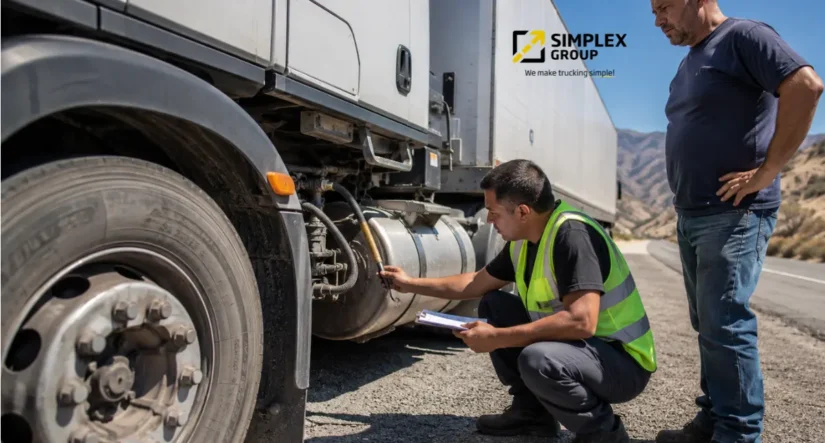
Air Leaks
Audible air leaks at the compressor, lines, fittings, or brake chambers are one of the fastest things a trained inspector identifies, often before the vehicle is even fully stopped for inspection. California’s temperature swings, hot Central Valley days into cool nights, coastal humidity near the ports, accelerate wear on rubber seals and fittings compared to more climate-stable regions, which is part of why leak-related citations show up here at elevated rates.
A slow leak that a driver has adapted to (topping off air pressure more frequently, allowing extra build time before departure) will still fail inspection even though the truck “runs fine” day to day. Inspectors test for the system’s ability to build and hold pressure within spec, not just whether the brakes currently work.
What This Means for Fleet Managers Running California Routes
If your fleet regularly runs the I-5, I-10, or I-15 corridors, or serves the ports of LA/Long Beach, the practical response is the same one that applies during national Brake Safety Week, just applied year-round rather than for one week in August:
- Build ABS lamp checks into every documented pre-trip inspection, not just as a driver habit but as a logged item.
- Prioritize air system leak checks on units that regularly run mountain grades, where sustained brake application accelerates wear.
- Track which units are cited most often on California-specific routes and flag them for more frequent maintenance intervals than the fleet-wide schedule.
- Treat a California CHP citation the same way you’d treat a Brake Safety Week citation for CSA purposes; it carries the same weight in your Vehicle Maintenance BASIC regardless of which agency wrote it.
How Simplex Group Supports California Fleets
Simplex Group’s Rancho Cucamonga office works with fleets running the Inland Empire, Central Valley, and ports corridors specifically, which means our compliance guidance reflects California’s actual enforcement patterns rather than generic national averages. If your fleet has seen a pattern of ABS or air-leak citations on California routes, our team can review your CSA trend alongside your insurance program to see where the exposure is coming from.
FAQs
Does CHP participate in CVSA’s national Brake Safety Week campaign?
Yes, California Highway Patrol coordinates with CVSA and conducts Brake Safety Week inspections statewide during the national campaign window, in addition to its own year-round commercial enforcement activity.
Are California’s brake inspection standards different from federal standards?
California enforces the same core federal brake standards under 49 CFR Part 393 that apply nationally, though CHP officers also enforce certain state-specific vehicle code provisions during roadside stops.
What’s the fastest way to check for an air leak before a trip?
A basic pre-trip check includes listening for hissing near fittings, chambers, and connections after building full system pressure, then watching for excessive air pressure drop while holding the brakes applied for a set period, both of which can be done without special equipment.