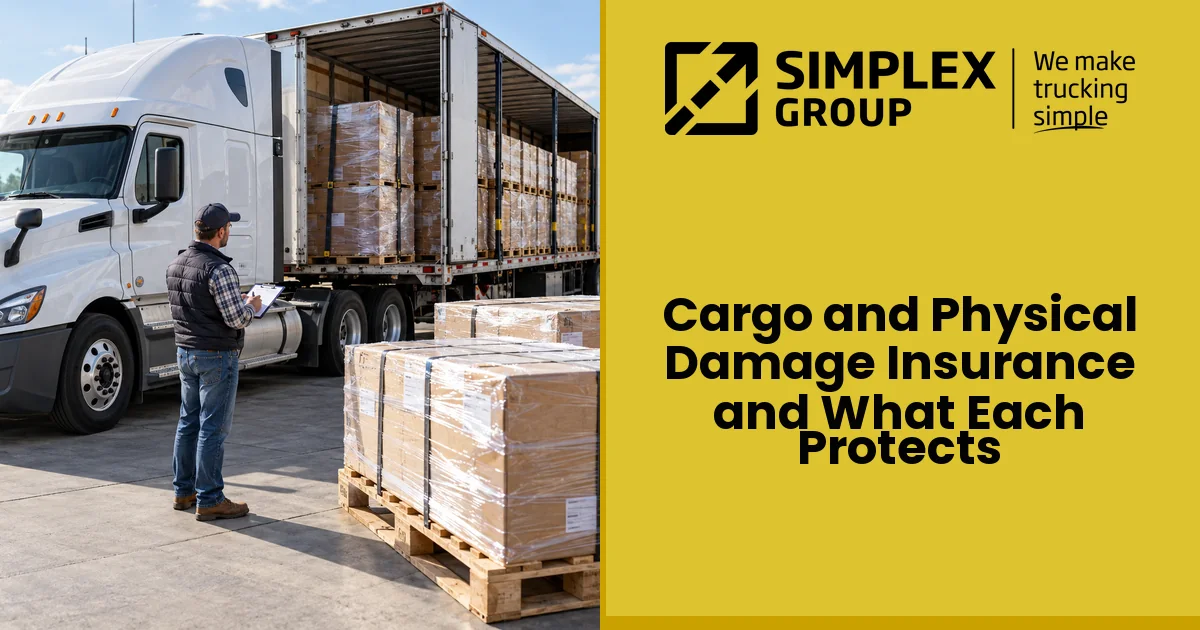
- Motor truck cargo insurance addresses covered loss or damage involving freight the carrier transports, while physical damage insurance addresses covered damage to insured trucks or equipment.
- One accident can involve several different exposures. Damage to the tractor, customer’s freight and third-party property should not be assumed to fall under the same insurance coverage.
- Carriers should review ownership, insured equipment, cargo types and values, contractual requirements, limits or valuation provisions, deductibles and applicable endorsements before relying on a certificate or coverage name.
Table of Contents
An accident can damage a truck, its trailer and the freight at the same time. That does not mean one insurance coverage handles every part of the loss.
For a carrier, the useful starting point is the property involved and the policy that may respond. I would make that distinction clear before the truck leaves, while there is time to ask questions and review the documents.
Motor truck cargo insurance addresses the carrier’s covered exposure involving transported freight. Physical damage insurance addresses covered damage to insured vehicles or equipment under the applicable coverage. Each has its own terms, limits or valuation basis, deductibles and conditions.
Identify the property before choosing the coverage
The truck and the shipment represent different interests. Your business may own the tractor, lease the trailer and be responsible for another company’s cargo. Those arrangements should be described accurately in the insurance submission.
A truck’s physical damage coverage does not automatically establish cargo coverage. A cargo policy does not automatically insure the tractor. For a leased or borrowed trailer, ask how its physical damage exposure is addressed and what the lease requires.
Simplex Group distinguishes physical damage from motor truck cargo coverage. That distinction is a useful starting point, but the policy and ownership arrangements determine the detailed answer.
Work through a single incident carefully
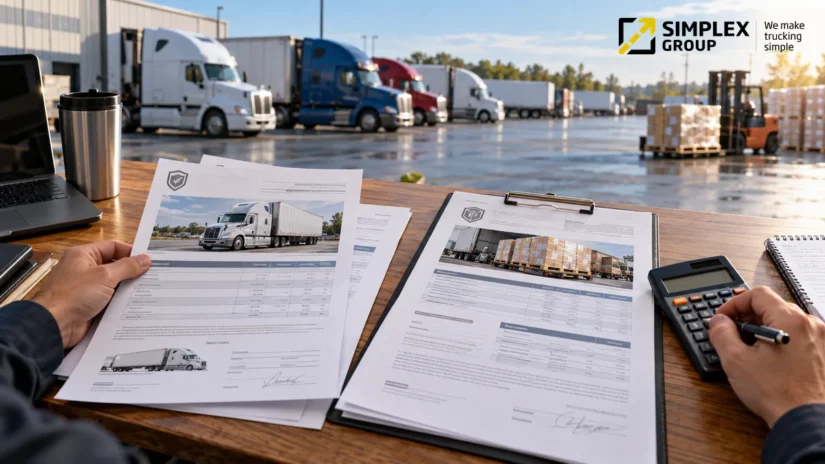
Imagine a hypothetical collision that damages an insured tractor and the customer’s palletized goods. The vehicle damage may be considered under the applicable physical damage coverage. The freight damage requires a cargo coverage review. Injury or damage to other people’s property can raise separate liability questions.
Each part of the incident needs its own evidence. Vehicle photographs, repair information and ownership documents explain the equipment loss. Shipping documents, cargo condition records, load value and incident details help explain the freight loss.
The example does not establish that either claim will be paid. Coverage depends on the policy, cause of loss and other relevant facts. It shows why a carrier should know which records and policy contacts are needed for each exposure.
Ask what physical damage includes
Physical damage commonly involves collision coverage and comprehensive or specified causes of loss coverage, depending on the policy. Ask how the proposal addresses a collision, theft, fire and other events relevant to your equipment.
Review which vehicles are insured, how their values are determined and what deductible applies. Compare the schedule with the actual fleet. Equipment acquired during the term may have notification conditions that require action.
The financing agreement can introduce another obligation. A lender or lessor may require coverage, particular limits or evidence of its interest. Review the agreement and the insurance wording together so the business understands both.
Downtime also needs its own discussion. Damage coverage for a vehicle does not automatically replace the revenue lost while the truck is unavailable. Ask whether a separately offered benefit addresses rental or downtime and how its conditions apply.
Ask how cargo coverage fits the shipment
For cargo, identify the commodities, their values and the handling arrangements. Ask whether the policy includes relevant causes of loss and whether exclusions, sublimits or endorsements change the available protection.
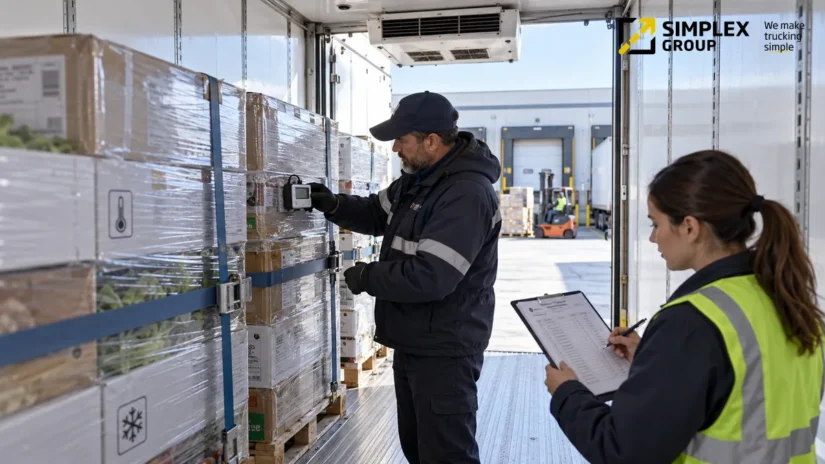
Temperature controlled cargo needs a specific conversation about spoilage, equipment breakdown and other potential causes. Theft exposure also deserves a review of the actual conditions rather than an assumption based on the word “theft” in a summary.
The main limit should be evaluated against the loads the business accepts. Shipping a higher value commodity under the same policy can change the carrier’s exposure even when the equipment has not changed.
Keep contractual obligations visible
The customer may require a cargo limit. The equipment lease may require physical damage coverage. Those requirements belong in separate fields in the insurance review.
A certificate can provide evidence of insurance, but it does not rewrite exclusions or other policy terms. Ask for the wording and endorsements needed to evaluate the particular exposure. If a contract requests protection the policy does not provide, resolve that issue before committing to the work.
Create a simple review record: property involved, owner, carrier responsibility, relevant policy, applicable limit or valuation basis, deductible and unresolved question. That record can help the business explain a decision without treating coverage names as complete answers.
Review the exposures when the business changes
A new tractor, rented trailer or unfamiliar commodity can require different information and coverage arrangements. Put the insurance conversation into the change itself.
Simplex Group can help carriers discuss their insurance needs with the relevant specialists. Start with a clear account of what you own, what you use and what you haul. That is the information a useful coverage review depends on.
FAQs
What is the difference between cargo insurance and physical damage insurance?
Motor truck cargo insurance addresses the carrier’s covered exposure involving transported freight. Physical damage insurance addresses covered damage to insured vehicles or equipment. Each coverage has its own terms, deductibles, limits or valuation provisions and conditions.
Does motor truck cargo insurance cover damage to the tractor?
Not automatically. Cargo insurance is focused on transported freight, while damage to an insured tractor would generally require review under the applicable physical damage coverage.
Does physical damage insurance cover downtime after an accident?
Vehicle damage coverage does not automatically replace revenue lost while a truck is unavailable. Carriers should ask whether rental, downtime or another separately offered benefit is available and review the conditions that apply.