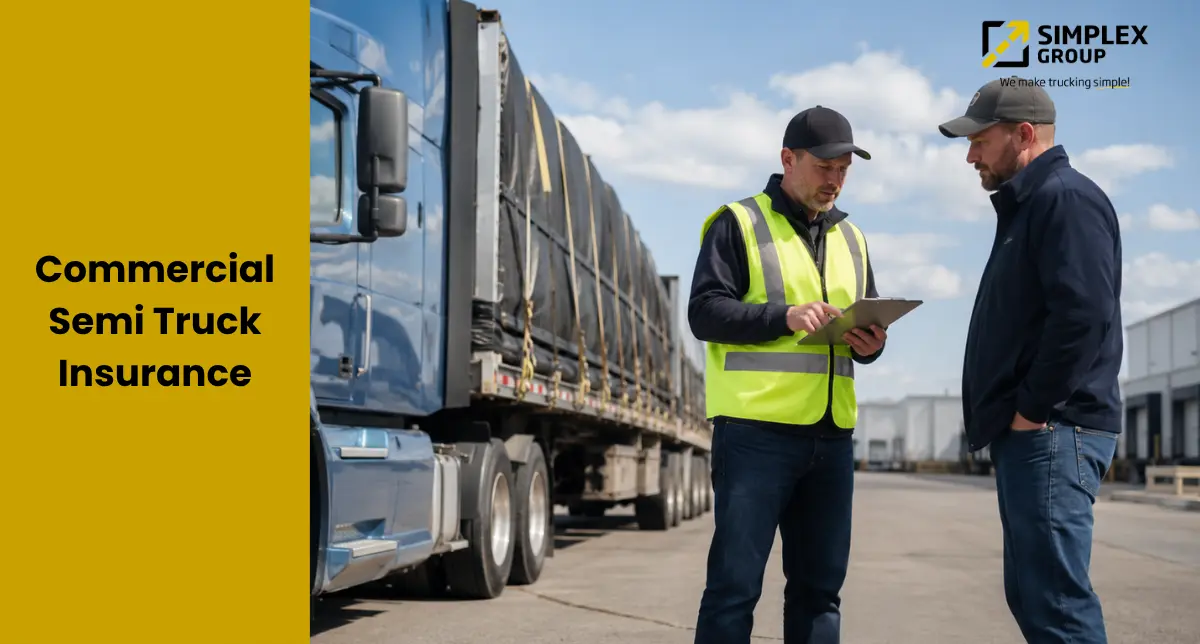
- Commercial semi truck insurance helps protect trucking businesses from accidents, cargo damage, liability claims, theft, equipment damage, downtime, and other financial risks.
- Coverage can include primary liability, physical damage, motor truck cargo, non-trucking liability, bobtail, trailer interchange, general liability, occupational accident, workers’ compensation, reefer breakdown, and excess liability.
- Insurance costs depend on factors such as authority status, number of trucks, freight type, routes, driver history, claims, inspections, safety violations, years in business, and compliance performance.
Table of Contents
Commercial semi truck insurance is one of the most important investments a trucking business can make. Whether you are an owner-operator, a new authority, or a growing fleet, the right insurance coverage helps protect your trucks, your cargo, your drivers, your customers, and the business you are working hard to build.
But in trucking, insurance is not just about buying a policy. It is part of a larger operational strategy that includes compliance, permitting, safety, tax reporting, risk management, and the ability to keep your trucks moving legally and confidently.
At Simplex Group, we understand that every carrier operates differently. For more than 25 years, we have worked with trucking entrepreneurs nationwide, helping them launch, scale, and stay compliant. Through Simplex Insurance, our compliance experts, and our Freight4U division, we help carriers manage the different parts of their operation so they can focus on the road ahead.
In this guide, we will break down what commercial semi truck insurance is, what it typically covers, what affects the cost, what requirements trucking companies should understand, and how to choose insurance support that fits the way your business actually operates.
What Is Commercial Semi Truck Insurance?
Commercial semi truck insurance is a specialized type of business insurance designed to protect trucking operations from the financial risks that come with operating commercial trucks. These risks can include accidents, injuries, cargo damage, vehicle damage, liability claims, theft, downtime, and other unexpected events.
Unlike regular auto insurance, semi truck insurance is built for commercial transportation. A semi truck may travel across state lines, haul valuable freight, operate under federal motor carrier regulations, and expose the business to risks that are much larger than those of a personal vehicle.
For that reason, commercial truck insurance usually combines several types of coverage. A single policy may include liability insurance, physical damage coverage, motor truck cargo insurance, non-trucking liability, trailer interchange, general liability, and other protections depending on the operation.
Why Semi Truck Insurance Is Different From Regular Auto Insurance
A personal auto policy is not designed to cover a vehicle used for commercial freight transportation. Semi trucks are heavier, travel longer distances, carry more valuable cargo, and are subject to more complex regulations.
A trucking business also faces risks beyond the vehicle itself. For example, a carrier may need to prove financial responsibility to meet operating authority requirements. A shipper or broker may request a certificate of insurance before assigning freight. A leased owner-operator may need specific coverage depending on the motor carrier they work with. A fleet may need different limits, endorsements, and risk controls than a single-truck operation.
That is why commercial semi truck insurance should be selected based on how the business operates, what freight it hauls, where it travels, and what contractual or regulatory requirements apply.
Who Needs Commercial Semi Truck Insurance?
Commercial semi truck insurance is commonly needed by:
- Owner-operators.
- New authorities.
- Motor carriers.
- Private carriers.
- For-hire truckers.
- Small fleets.
- Growing trucking companies.
- Long-haul carriers.
- Regional and local trucking operations.
- Freight haulers.
- Hotshot operators.
- Businesses use trucks for commercial transportation.
The exact coverage needed depends on the structure of the business. An owner-operator leased to a motor carrier may have different insurance needs than a new authority operating under its own DOT and MC numbers. A small fleet hauling refrigerated freight may need different protection than a carrier hauling general dry van freight.
Why Insurance Is Only One Part of Keeping a Trucking Business on the Road
In our experience, carriers who make strong insurance decisions are not only looking for the lowest premium. They are looking for coverage that fits their operation and supports long-term stability.
Insurance, compliance, and safety are closely connected. A carrier with poor safety practices, missing records, compliance issues, or repeated violations may face more challenges when securing coverage or managing risk. That is why we believe insurance should be part of a broader strategy that includes FMCSA compliance, driver qualification file management, CSA monitoring, hours-of-service management, permitting, and ongoing operational discipline.
From compliance and permitting to insurance and safety, Simplex Group helps trucking businesses keep their operation running smoothly so they can focus on moving forward.
What Does Commercial Semi Truck Insurance Cover?
Commercial semi truck insurance can include several types of coverage. Not every trucking business needs every option, but understanding the main coverages is essential before requesting a quote or choosing a policy.
The best insurance strategy starts with a clear picture of your operation: your trucks, drivers, freight, routes, contracts, filings, safety profile, and business goals.
Primary Liability Insurance
Primary liability insurance is one of the core coverages for trucking companies. It helps cover bodily injury or property damage that your truck may cause to others in an accident.
For many motor carriers, liability coverage is also tied to federal and state operating requirements. If you operate under your own authority, you may need specific insurance filings to show proof of financial responsibility.
Primary liability does not typically cover damage to your own truck or your own cargo. It is designed mainly to protect others from damage caused by your commercial vehicle.
Physical Damage Coverage
Physical damage coverage helps protect your truck and equipment if they are damaged by covered events. This may include collision, theft, vandalism, fire, severe weather, or other covered losses, depending on the policy.
For owner-operators and fleets, this coverage can be critical. A semi truck is a major business asset. If the truck is damaged and cannot operate, the business may lose revenue while repair costs continue to build.
Physical damage coverage is especially important for carriers with financed or leased equipment, since lenders may require it.
Motor Truck Cargo Insurance
Motor truck cargo insurance helps protect the freight you are hauling. If cargo is damaged, stolen, or lost due to a covered event, this coverage may help pay for the loss.
Cargo coverage is not one-size-fits-all. The type of freight matters. A carrier hauling refrigerated goods, electronics, building materials, machinery, or general freight may face different cargo risks and coverage requirements.
Before choosing cargo insurance, trucking businesses should understand the value of the freight they haul, shipper or broker requirements, exclusions, deductibles, and any special conditions in the policy.
Non-Trucking Liability and Bobtail Insurance
Non-trucking liability insurance generally provides liability coverage when a truck is being used for non-business purposes and is not under dispatch. Bobtail insurance may apply when a truck is being operated without a trailer, depending on the policy and situation.
These coverages are especially relevant for certain owner-operators leased to motor carriers. However, the details can vary, so it is important to confirm what is covered, when coverage applies, and where gaps may exist.
Trailer Interchange Coverage
Trailer interchange coverage may help protect a trailer that you do not own but are using under a trailer interchange agreement. This can be important for carriers who haul trailers belonging to another party.
This coverage is not automatically included in every commercial truck insurance policy. If your operation uses non-owned trailers, it is important to discuss this exposure before choosing coverage.
General Liability Insurance for Trucking Businesses
General liability insurance helps protect the business from certain third-party claims that are not directly related to driving accidents. This may include claims involving bodily injury, property damage, or other business-related liability exposures.
For trucking companies, general liability can be useful when dealing with customers, terminals, loading locations, or other business activities outside the truck itself.
Additional Coverages to Consider
Depending on your operation, you may also need or consider:
- Occupational accident coverage.
- Workers’ compensation.
- Rental reimbursement.
- Downtime coverage.
- Roadside assistance for heavy trucks.
- Uninsured or underinsured motorist coverage.
- Cyber liability coverage.
- Umbrella or excess liability.
- Reefer breakdown coverage.
- Pollution liability, depending on freight type.
The right combination depends on how your business operates. A one-truck owner-operator, a new authority, and a 20-truck fleet may all need different insurance strategies.
How Much Does Commercial Semi Truck Insurance Cost?
The cost of commercial semi truck insurance can vary significantly. There is no single price that applies to every trucking business because insurers evaluate many factors before offering coverage.
A new authority hauling long-haul freight may receive a very different quote than an established carrier with strong safety records and several years of clean loss history. The type of truck, freight, drivers, routes, coverage limits, and compliance profile can all influence the premium.
Factors That Affect Semi Truck Insurance Rates
Common factors that may affect commercial truck insurance rates include:
- Type of trucking operation.
- Number of trucks.
- Vehicle type, value, and age.
- Type of freight hauled.
- Cargo value.
- Radius of operation.
- State and routes traveled.
- Driver experience.
- Driving records.
- Claims history.
- Inspection history.
- Safety violations.
- Coverage limits.
- Deductibles.
- Operating authority status.
- Years in business.
- Compliance and safety performance.
Insurance companies look at risk. The more predictable, compliant, and well-managed your operation appears, the stronger your position may be when seeking coverage.
Why New Authorities Often Pay More
New authorities often face higher insurance costs because they do not yet have an established operating history. Insurers may have limited information about claims history, safety practices, driver management, and compliance performance.
This does not mean a new authority cannot secure appropriate coverage. It means preparation matters. Having the right business information, driver details, vehicle details, compliance documents, and operational plan ready can make the quoting process more efficient.
At Simplex Group, we work with many trucking entrepreneurs who are launching or growing their businesses. We understand that a new authority is not just buying insurance; it is building a foundation for long-term operation.
How Safety, Compliance, and Claims History Can Influence Costs
Safety and compliance can directly affect the risk profile of a trucking company. Accidents, violations, poor inspection results, weak driver qualification file management, and hours-of-service issues can create problems that go beyond insurance.
A strong insurance strategy starts before a claim happens. It starts with the daily habits that reduce risk across the fleet: maintaining records, monitoring CSA performance, managing driver files, preparing for audits, tracking HOS compliance, and correcting issues before they become larger problems.
Simplex Group’s compliance programs help fleets stay aligned with FMCSA regulations, reduce risk, and improve safety performance. From driver qualification file management and CSA monitoring to mock audits and HOS management, these operational details can support a healthier trucking business.
How to Prepare Before Requesting a Quote
Before requesting a commercial semi truck insurance quote, gather the information insurers are likely to need. This may include:
- Business name and entity information.
- DOT number.
- MC number, if applicable.
- Operating authority status.
- Vehicle identification numbers.
- Truck and trailer details.
- Driver information.
- Driving history.
- Type of freight hauled.
- Routes and radius of operation.
- Cargo value.
- Current or prior insurance details.
- Loss runs, if available.
- Required filings.
- Desired coverage limits.
Being prepared can help avoid delays and reduce confusion. It also helps ensure the quote reflects the real needs of your operation.
Commercial Semi Truck Insurance Requirements for Trucking Companies
Insurance requirements for trucking businesses can depend on several factors, including whether the carrier operates interstate or intrastate, the type of freight hauled, vehicle weight, operating authority, and contractual obligations.
Because requirements can vary, trucking companies should work with knowledgeable professionals who understand both insurance and transportation compliance.
FMCSA Insurance Filings and Operating Authority
Motor carriers operating under federal authority may need insurance filings with the FMCSA. These filings show that the carrier meets financial responsibility requirements.
Common trucking insurance filings may include forms such as BMC-91, BMC-91X, or MCS-90, depending on the operation and regulatory requirements.
Insurance filings are not just paperwork. They are tied to your ability to operate legally. If filings are missing, incorrect, or canceled, a carrier’s authority may be affected.
DOT, MC Numbers, and Compliance Basics
A DOT number identifies a commercial motor carrier for safety monitoring and compliance purposes. An MC number may be required for certain for-hire interstate operations.
Insurance is closely connected to these identifiers because a carrier’s authority, filings, safety record, and compliance profile can all affect how the business is viewed by insurers, brokers, shippers, and regulators.
For carriers, this means the insurance process should not be separated from compliance. The two often work together.
What Owner-Operators Should Know
Owner-operators should understand whether they operate under their own authority or lease onto a motor carrier. This distinction can significantly affect insurance needs.
An owner-operator under their own authority may need primary liability, cargo, physical damage, filings, and other coverages. An owner-operator leased to a motor carrier may have some coverage provided by the carrier, but may still need non-trucking liability, physical damage, occupational accident coverage, or other protection.
Before assuming coverage exists, owner-operators should review the lease agreement, policy terms, deductibles, exclusions, and responsibilities.
What Small Fleets Should Know
Small fleets have different risks than single-truck operations. As the number of trucks and drivers increases, so does the importance of safety systems, driver qualification files, maintenance procedures, claims management, and compliance oversight.
A small fleet should review insurance not only when adding trucks, but also when changing freight types, expanding routes, hiring drivers, buying trailers, or taking on new customer contracts.
At Simplex Group, we understand that every carrier operates differently. That is why our Compliance Suite offers multiple levels of support, from self-service tools through the Simplex Hub to on-demand support with the Essentials Program and full-scale management through the Managed Program with a Dedicated Account Manager.
How to Choose the Right Commercial Semi Truck Insurance
Choosing the right commercial semi truck insurance is not only about finding the lowest price. A cheaper policy may leave serious gaps if it does not match your freight, equipment, authority, contracts, or risk exposure.
The goal is to build a coverage strategy that protects your business while supporting compliance and long-term growth.
Match Coverage to the Freight You Haul
The freight you haul should influence your coverage. Different cargo creates different exposures.
For example, refrigerated freight may require special attention to temperature-related losses. High-value cargo may require higher cargo limits. Machinery, vehicles, construction materials, or hazardous materials may create unique risks and contractual requirements.
Before choosing a policy, confirm that the coverage aligns with the freight you actually haul.
Review Your Routes, Radius, and Equipment
A local carrier and a long-haul interstate carrier may have different insurance needs. Radius of operation, states traveled, terminals, parking locations, and delivery environments can all affect risk.
Equipment also matters. A newer tractor with financing may require physical damage coverage. A carrier pulling non-owned trailers may need trailer interchange. A fleet using reefers may need reefer-related protection.
Your insurance should reflect the way your trucks are used in the real world.
Look Beyond Price
Price matters, but it should not be the only factor. Trucking businesses should also review:
- Coverage limits.
- Deductibles.
- Exclusions.
- Claims support.
- Filing support.
- Industry expertise.
- Policy flexibility.
- Speed of certificates.
- Understanding of trucking operations.
- Ability to support compliance-related needs.
A low premium may not be a good deal if it creates gaps that expose the business after a loss.
Choose Support That Understands Trucking Operations
Trucking insurance requires an understanding of freight, FMCSA requirements, filings, authority, owner-operator structures, fleet operations, safety performance, and compliance responsibilities.
This is where Simplex Group’s integrated approach is valuable. Through Simplex Insurance, our team helps carriers secure coverage for unexpected circumstances. Through our compliance experts, we help with compliance, permitting, and tax reporting. Through Freight4U, we assist with freight planning and factoring services.
The result is a more complete support system for trucking entrepreneurs who want to stay protected, compliant, and prepared for growth.
How Simplex Group Helps Trucking Entrepreneurs Stay Protected and Compliant
Simplex Group was built to support trucking entrepreneurs. We know that carriers are not just moving freight. They are building businesses, supporting families, creating opportunities, and working toward a better future.
That is why our approach goes beyond one service. We help carriers address the operational areas that affect whether they can stay on the road, reduce risk, and grow with confidence.
Insurance Support Through Simplex Insurance
Simplex Insurance helps trucking businesses find coverage for the unexpected circumstances they may face on the road. Whether you are an owner-operator, new authority, or small fleet, the objective is to help align your insurance with your real operation.
This can include evaluating coverage needs, understanding business risks, preparing for quote requests, and helping carriers think through the protection they may need.
Compliance, Permitting, and Tax Reporting Support
Insurance is important, but compliance keeps the operation legally structured and better prepared. Simplex Group experts support carriers with compliance, permitting, and tax reporting so they can manage the responsibilities that come with operating a trucking business.
Our programs are designed to help fleets stay compliant with FMCSA regulations, reduce risk, and improve safety performance. This includes support with driver qualification file management, CSA monitoring, mock audits, HOS management, and other essential compliance tasks.
Freight Planning and Factoring Through Freight4U
A trucking business also needs freight opportunities and healthy cash flow. Freight4U assists customers with freight planning and factoring services, helping carriers manage another important part of the business.
This matters because insurance, compliance, freight, and cash flow are all connected. A carrier that is properly insured but struggling operationally may still face challenges. Simplex Group’s broader support model is designed to help carriers manage more than one piece of the puzzle.
Flexible Support for Every Type of Carrier
Every carrier operates differently. Some prefer a self-service approach. Others need on-demand help. Some want full-scale management and a dedicated point of contact.
That is why Simplex Group offers different levels of support:
- Simplex Hub for carriers who prefer self-service tools.
- Essentials Program for carriers who need on-demand expert support.
- Managed Program for carriers who want full-scale management with a Dedicated Account Manager.
This flexibility allows carriers to choose the level of support that fits their business today, while leaving room to grow.