
FMCSA ELD Mandate Compliance Checklist
Does the ELD mandate apply to your operation? The ELD rule applies to most motor carriers and drivers who are required to keep records of duty status (RODS). FMCSA highlights that operators should first confirm applicability and any exemptions before building their program. If an exemption applies, maintain documentation to support it. From a compliance […]
Read More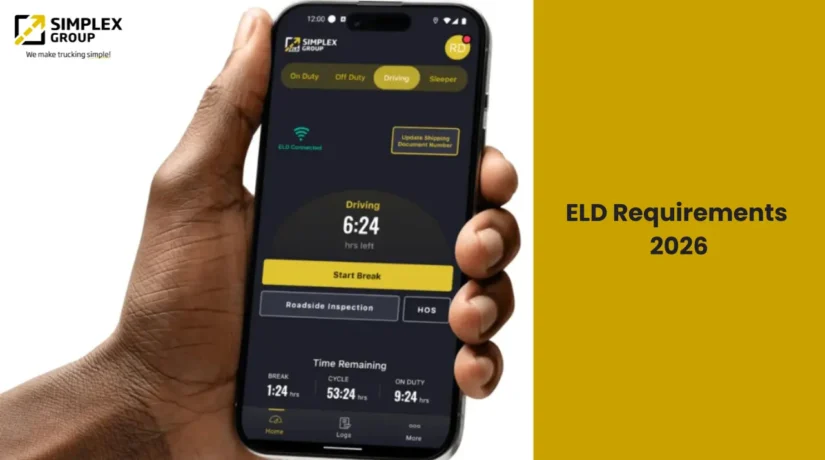
ELD Requirements 2026
The essentials of the ELD mandate Electronic Logging Devices (ELDs) automate the recording of driving time and other Hours of Service (HOS) elements by synchronizing with the vehicle’s engine. Their purpose is to provide accurate, tamper-resistant RODS while reducing administrative burden. Critically, ELDs do not change the underlying HOS limits; they only change how records […]
Read More
Trucker Tax Services 2026 for Owner-Operators & Company Drivers
Running a profitable trucking operation requires more than driving skill and grit, it demands disciplined financial controls, compliant filings, and year-round tax planning. As a full-service trucking compliance and tax partner with over two decades supporting trucking entrepreneurs, we align DOT safety compliance with tax preparation and bookkeeping so your records are audit-ready and your […]
Read More
Unified Carrier Registration Program (UCR): 2026 Compliance Guide for Trucking Companies
What Unified Carrier Registration Program (UCR) is and how it relates to FMCSA The Unified Carrier Registration Program (UCR) is a yearly state-administered program created under 49 U.S.C. §14504a. It funds state motor-carrier safety activities and applies to for-hire and private interstate carriers, freight forwarders, brokers, and leasing companies. Registration and payment are handled through […]
Read More
FMCSA New Entrant Safety Audit: A Practical 2026 Guide
What the New Entrant Safety Audit Is and When It Happens The FMCSA New Entrant Safety Audit is an early, focused review of a carrier’s safety management controls. It verifies that you have the essential policies, records, and day-to-day practices to operate safely under the Federal Motor Carrier Safety Regulations (FMCSRs) and, if applicable, the […]
Read More
DOT Compliance Services 2026: Full-Service FMCSA Compliance for Trucking Companies
What DOT Compliance Is and What a Full-Service Program Includes DOT compliance is the umbrella of federal and state requirements that motor carriers must meet to operate legally and safely in the United States. In practice, it means aligning your company with Federal Motor Carrier Safety Regulations (FMCSRs), maintaining qualified drivers and safe equipment, filing […]
Read More
Temporary Fuel Permit
What Is a Temporary Fuel Permit? A temporary fuel permit (often called an IFTA temporary fuel permit, 72-hour fuel permit, or simply fuel trip permit) authorizes a qualified motor vehicle to purchase and consume motor fuel while traveling through a state or province when the carrier does not hold a valid IFTA license and decals […]
Read More
Texas Oversize Permits
As a compliance partner with more than 20 years serving carriers, we know that oversize or overweight (OS or OW) permitting in Texas is equal parts regulation, planning, and paperwork discipline. What counts as oversize/overweight in Texas Texas follows federal baselines with state-specific nuances. In general, vehicles operating without an oversize or overweight permit must […]
Read More
Oversize Load Permit
When you need an oversize or overweight permit In practical terms, you need an oversize or overweight permit any time your vehicle or combination exceeds legal size or weight limits for the jurisdictions you travel through. At the federal level, the commonly referenced thresholds are 80,000 lb gross vehicle weight, 20,000 lb on a single […]
Read More
Truck Permits
Managing truck permits correctly is a critical part of running a safe, compliant, and profitable trucking operation. Regulations change frequently at the city, county, state, and federal levels, and the consequences of an oversight can be costly: delays, fines, or even being taken off the road. At Simplex Group, we have refined our methods over […]
Read More- Latest Posts
- 1
- 2
- 3
- 4
- 5
- 6
- 7
- …
- 14
- Older Posts