
- Interstate authority gives a carrier regulatory permission to operate in interstate commerce, but it does not automatically mean the business is ready to haul freight.
- True readiness includes insurance filings, BOC-3, UCR, IRP, IFTA, permits, DQ files, ELD setup, HOS procedures, safety records, tax reporting, freight planning, and cash flow preparation.
- New carriers should complete a readiness review before the first load because active authority alone does not prevent dispatch delays, roadside inspection problems, audit exposure, or operational cash-flow issues.
Getting interstate authority is an important milestone for a motor carrier. But it is not the same thing as being fully ready to operate. That distinction matters.
A carrier may receive operating authority, have an MC Number, and appear ready on paper, yet still be missing critical pieces required to run safely, legally, and efficiently. Insurance filings, BOC-3, UCR, IRP, IFTA, driver qualification files, ELD setup, Hours of Service procedures, safety controls, tax reporting, and freight planning all play a role in whether a trucking company is actually prepared to haul its first load.
According to the FMCSA, companies generally need interstate operating authority, also known as an MC Number or docket number, when they transport passengers or federally regulated commodities owned by others for compensation in interstate commerce. FMCSA also explains that operating authority determines the type of operation a company may run and the cargo it may carry.
That authority is essential. But it does not automatically mean every compliance, safety, insurance, permitting, tax, and operational requirement is complete.
At Simplex Group, after more than 25 years of supporting trucking entrepreneurs nationwide, we have seen this misunderstanding many times: a carrier believes that once authority is active, the business is ready to move freight. In reality, authority gets you started. Readiness keeps you moving.
Interstate Authority Is Not the Same as Being Ready to Operate
Interstate authority is a regulatory permission. Operational readiness is a business condition.
That difference is the foundation every new carrier should understand.
Interstate authority allows a motor carrier to operate in interstate commerce under the authority granted by FMCSA. For many for-hire carriers, that authority is tied to an MC Number. However, being ready to operate means the carrier has completed the practical and compliance-related steps needed to run without avoidable interruptions.
A simple way to think about it is this:
| Interstate Authority | Being Ready to Operate |
| Confirms the type of operation you are authorized to perform | Confirms your business is prepared to run safely and legally |
| Involves FMCSA registration and authority status | Involves compliance, insurance, permits, taxes, safety, and operations |
| May include MC Number approval | Includes filings, records, systems, and procedures |
| Gets your company recognized as authorized | Helps keep your trucks on the road |
| Is one requirement | Is the full operating foundation |
This is where many new carriers get into trouble. They focus on getting authority but delay everything else until the first load is already available. By that point, they may discover that insurance filings are not complete, plates are not ready, UCR has not been handled, IFTA is missing, the ELD is not set up, or driver qualification files are incomplete.
In DOT compliance, timing matters. A missing step can delay dispatch, create audit exposure, or lead to costly problems during a roadside inspection.
What Interstate Authority Actually Means
Interstate operating authority is FMCSA’s authorization for certain companies to operate across state lines or in interstate commerce. FMCSA notes that operating authority may be referred to as an MC, FF, or MX number depending on the type of authority granted, and that a company may need more than one operating authority depending on its planned operations.
For most new trucking companies, the key terms are:
- USDOT Number: used to identify a motor carrier for safety monitoring and regulatory purposes.
- MC Number: often required for for-hire carriers operating in interstate commerce.
- Operating Authority: the legal authority that determines what type of operation the company may conduct.
- Interstate Commerce: transportation that crosses state lines or is part of a shipment moving between states, even if one specific segment occurs inside a single state.
FMCSA states that companies generally need interstate operating authority in addition to a USDOT Number when they transport passengers for compensation or transport federally regulated commodities owned by others for compensation in interstate commerce.
That means authority answers questions such as:
- What type of carrier are you?
- Are you operating for-hire?
- Are you transporting regulated property?
- Are you operating in interstate commerce?
- What authority applies to your business model?
But it does not answer every operational question.
It does not automatically mean your insurance filing is active. It does not complete UCR. It does not set up IRP or IFTA. It does not create driver qualification files. It does not prepare you for a New Entrant Safety Audit. It does not monitor your CSA performance. It does not establish your Hours of Service controls.
Authority is the beginning of the process, not the full compliance system.
What Being Ready to Operate Really Means
Being ready to operate means your company can accept freight and run with the right legal, safety, insurance, tax, and operational structure in place.
At Simplex Group, we view readiness as a complete operating picture. Compliance, permitting, insurance, safety, tax reporting, freight planning, and cash flow should not operate in separate silos. They need to work together before the first load.
For a new interstate carrier, readiness usually includes five major areas.
1. Compliance Readiness
Compliance readiness means your company is prepared to meet FMCSA and DOT requirements from day one.
This may include:
- Correct FMCSA registration information.
- Active and accurate authority status.
- Driver qualification files.
- Drug and alcohol testing program enrollment, when applicable.
- FMCSA Clearinghouse setup, when applicable.
- ELD and Hours of Service procedures.
- Vehicle maintenance records.
- Accident register.
- Roadside inspection response process.
- Safety management controls.
- Preparation for the New Entrant Safety Audit.
FMCSA explains that new entrants must operate safely, maintain up-to-date records, conduct periodic inspections and maintenance on commercial motor vehicles, and pass a Safety Audit. FMCSA also monitors new entrant safety performance through roadside inspections.
That means compliance is not something to organize after the company has already been operating for months. The records you create early can become the records reviewed later.
2. Insurance Readiness
Insurance readiness means the carrier has the right coverage and the required filings in place.
FMCSA states that insurance requirements vary depending on the entity type, operating authority, cargo, and vehicle type. Once operating authority is granted, entities are required to maintain proof of insurance and designation of agents for service of process on file with FMCSA to avoid revocation proceedings.
For motor carriers, insurance readiness may involve:
- Public liability coverage.
- Cargo insurance, depending on customer or freight requirements.
- Physical damage coverage.
- General liability, when appropriate.
- Workers’ compensation or occupational accident coverage, depending on structure and state rules.
- Correct FMCSA insurance filings.
- MCS-90 endorsement, when applicable.
- BMC-91 or BMC-91X liability filing.
FMCSA’s Safety Planner notes that before FMCSA grants provisional operating authority, the applicant must provide proof of insurance using Form BMC-91 or BMC-91X for bodily injury and property damage insurance.
The important point is simple: a carrier can have authority in motion and still be unable to operate properly if insurance is not correctly aligned with the operation.
3. Permit and Tax Readiness
Permit and tax readiness means the carrier has the credentials required for where and how it will operate.
For interstate trucking, this often includes:
- UCR registration.
- IRP apportioned plates.
- IFTA account and decals.
- State permits when required.
- Oversize or overweight permits when applicable.
- Fuel tax reporting procedures.
- Quarterly IFTA filing process.
- Business tax and recordkeeping setup.
FMCSA explains that UCR is not an FMCSA program, but a congressionally established agreement among states for collecting registration information and fees from motor carriers, private motor carriers, brokers, freight forwarders, and leasing companies.
This is an area where new carriers often underestimate the details. Getting authority may be federal, but operating a truck across jurisdictions requires tax and credentialing readiness that goes beyond the MC Number.
4. Safety Readiness
Safety readiness means the carrier has systems to prevent violations, manage risk, and protect drivers, equipment, freight, and the public.
This includes:
- Driver qualification file management.
- License and medical card tracking.
- Hours of Service monitoring.
- ELD setup and review.
- Vehicle inspection and maintenance procedures.
- Roadside inspection response.
- Accident tracking.
- Corrective action process.
- CSA monitoring.
- Mock audits or internal compliance reviews.
FMCSA describes a Safety Audit as a review of a carrier’s records to verify that the carrier has basic safety management controls in place. The Safety Audit may include a review of safety data, motor carrier documents, and an interview with the carrier’s safety official.
This is why safety readiness cannot be treated as paperwork only. It is an operating discipline.
A carrier that waits until an audit notice arrives to organize safety records is already behind. A carrier that builds safety controls before hauling freight starts from a stronger position.
5. Freight and Cash Flow Readiness
A carrier may be compliant and insured but still struggle operationally if freight planning and cash flow are not prepared.
This part is often overlooked in compliance conversations, but it matters. New carriers need to think through:
- How they will find freight.
- Whether brokers or shippers will work with their new authority.
- How quickly they need payment after delivery.
- Whether factoring will help stabilize cash flow.
- How they will manage fuel costs.
- How they will handle insurance down payments.
- How they will pay drivers, vendors, and taxes.
- Whether dispatch and freight planning align with compliance limits.
This is where Simplex Group’s broader operating support becomes important. Our experts support compliance, permitting, and tax reporting, while Freight4U assists with freight planning and factoring services, and Simplex Insurance helps carriers secure coverage for unexpected circumstances on the road.
Being ready to operate is not only about being legal. It is about being prepared to run a sustainable business.
Interstate Authority vs. Ready to Operate: Side-by-Side Comparison
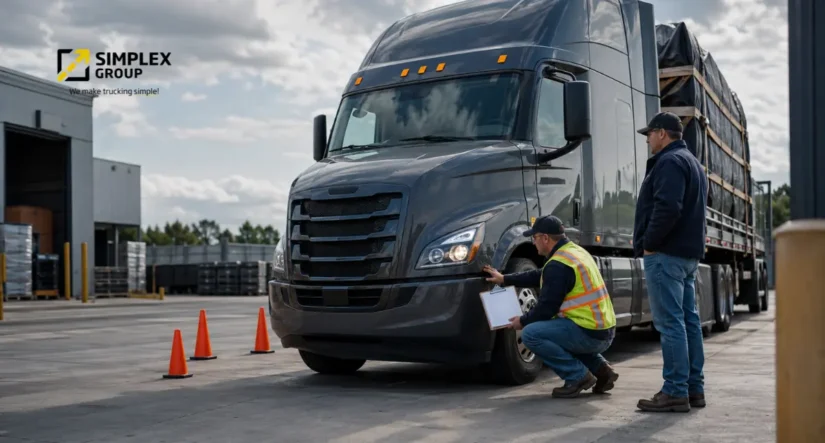
The following comparison shows why new carriers should not treat active authority as the finish line.
| Area | Having Interstate Authority Means | Being Ready to Operate Means |
| FMCSA Registration | Your company has obtained the authority required for your type of interstate operation | Your FMCSA information is accurate, active, monitored, and supported by compliance processes |
| Insurance | Required filings may be part of the authority process | Coverage, filings, endorsements, and operational risks are aligned |
| BOC-3 | Process agent designation is filed | Service of process requirements are handled and documented |
| UCR | Not automatically completed by the authority | UCR registration is current when required |
| IRP/IFTA | Not handled by the MC authority alone | Plates, decals, and fuel tax processes are ready for interstate travel |
| ELD/HOS | Not created by authority | Drivers can track Hours of Service correctly before dispatch |
| Driver Files | Not created by the FMCSA authority | DQ files are complete and maintained |
| Safety Audit | Not avoided by having authority | Records and safety controls are ready for review |
| Freight | Authority may allow you to operate | Freight planning, broker setup, and cash flow are prepared |
| Long-Term Compliance | Authority is a status | Compliance is managed continuously |
The best carriers understand this difference early. They do not ask only, “Is my authority active?” They ask, “Can my operation withstand the first load, the first inspection, the first audit, and the first cash-flow challenge?”
New Carrier Checklist Before Hauling Your First Load
Before accepting the first load, a new interstate carrier should complete a readiness review. The exact requirements depend on the operation, equipment, cargo, states traveled, and business model, but the following checklist covers the core areas most carriers should evaluate.
Authority, Insurance, and BOC-3
Before operating, confirm:
- USDOT Number is active and accurate.
- MC authority is active when required.
- Legal name, DBA, address, and contact information are correct.
- BOC-3 process agent filing is completed.
- Liability insurance filing is submitted and accepted.
- Cargo insurance is in place if required by customers, brokers, or cargo type.
- Policy limits match the actual operation.
- Vehicles and drivers are properly listed or scheduled as required by the policy.
- Insurance certificates are available for brokers and shippers.
- You understand what is covered and what is excluded.
A common mistake is buying a policy without fully aligning it to the freight, equipment, radius, drivers, and contracts involved. Insurance should match the operation you are actually running, not the operation you imagined during setup.
UCR, IRP, IFTA, and Permits
Before operating interstate, review:
- UCR registration.
- IRP apportioned registration.
- IFTA account and decals.
- State permits for specific jurisdictions when required.
- Oversize or overweight permits, if applicable.
- Weight-distance tax requirements in certain states, if applicable.
- Trip permits if permanent credentials are not yet ready.
- Fuel tax reporting process.
- Recordkeeping system for mileage and fuel purchases.
UCR, IRP, and IFTA are often misunderstood because they sound similar to general trucking registration. They are not the same thing. UCR relates to interstate carrier registration fees. IRP relates to apportioned vehicle registration. IFTA relates to fuel tax reporting for qualified vehicles operating in multiple jurisdictions.
A carrier that confuses these items may technically have authority but still lack the credentials needed to run legally across state lines.
ELD, HOS, Driver Files, and Safety Records
Before dispatch, confirm:
- ELD is installed and functioning, unless an exemption applies.
- Drivers know how to use the ELD.
- Hours of Service procedures are understood.
- Supporting documents are retained.
- Driver qualification files are complete.
- Medical certificates are valid and tracked.
- CDL information is verified when applicable.
- A drug and alcohol testing program is set up when applicable.
- Clearinghouse requirements are addressed when applicable.
- Vehicle maintenance files are created.
- Daily vehicle inspection procedures are in place.
- The accident register is prepared.
- Safety policies are documented.
- Roadside inspection procedures are understood.
FMCSA’s New Entrant program requires motor carriers to maintain records and demonstrate basic safety management controls.
That means your readiness should be visible in your documentation. If your systems are real, your records should show it.
Freight Planning, Factoring, and Cash Flow
Before accepting loads, review:
- Broker onboarding requirements.
- Certificate of insurance requirements.
- Factoring setup, if needed.
- Payment terms.
- Fuel cost planning.
- Toll and permit expenses.
- Dispatch process.
- Rate confirmation review.
- Detention, layover, and accessorial policies.
- Compliance impact of load scheduling.
- Driver availability and HOS limits.
- Maintenance reserve.
New carriers often focus heavily on getting the first load. Experienced operators focus on getting the right load under the right conditions.
A load that looks profitable can become a problem if it creates HOS pressure, sends the truck into a state without proper credentials, requires insurance coverage the carrier does not have, or creates a cash-flow gap the company cannot absorb.
Common Mistakes Carriers Make After Getting Authority
Mistake 1: Assuming Active Authority Means Full Compliance
Active authority does not build your compliance program. It does not create DQ files, audit your ELD records, monitor CSA performance, track expirations, or maintain vehicle files.
This is one of the most serious mistakes new carriers make. Authority may open the door, but compliance determines whether you can keep operating with confidence.
Mistake 2: Treating Insurance as a Checkbox
Insurance should not be treated as a basic formality. The filing matters, but so does the quality and fit of the coverage.
A carrier should understand:
- What cargo is covered.
- Which drivers are covered.
- Which vehicles are covered.
- What radius applies.
- What exclusions exist.
- Whether broker contracts require additional coverage.
- Whether filings have been accepted.
FMCSA makes clear that insurance requirements vary by authority type, cargo, vehicle, and entity type.
The wrong insurance setup can create problems even when the carrier believes it is compliant.
Mistake 3: Waiting Too Long to Prepare for the New Entrant Safety Audit
The New Entrant Safety Audit is not something to prepare for at the last minute.
FMCSA states that motor carriers must undergo a Safety Audit within the first 12 months of operations to complete the New Entrant Program.
By the time the audit is scheduled, the carrier may already need records showing how the company has operated. That may include driver records, vehicle maintenance, HOS records, supporting documents, accident information, and safety management controls.
Strong carriers prepare for the audit from day one.
Mistake 4: Forgetting That Compliance Is Ongoing
Compliance is not a one-time setup.
A trucking company must continue monitoring:
- Driver expirations.
- Medical cards.
- MVRs.
- Vehicle maintenance.
- Annual inspections.
- ELD records.
- HOS violations.
- Roadside inspections.
- CSA trends.
- Insurance renewals.
- Permit renewals.
- IFTA reporting.
- UCR renewal.
- MCS-150 biennial updates.
The companies that succeed long-term are not only the ones that start correctly. They are the ones who keep their records, systems, and safety performance current as the operation grows.
How to Stay Ready After Your Authority Becomes Active
Every carrier operates differently. A single owner-operator does not need the same support structure as a growing fleet with multiple drivers, vehicles, lanes, and customers.
That is why operational readiness should be scalable.
At Simplex Group, our Compliance Suite is designed with multiple levels of support depending on how the carrier wants to manage compliance.
Some carriers prefer a self-service approach through the Simplex Hub. Others need on-demand support through the Essentials Program. Growing fleets may benefit from full-scale management with a Dedicated Account Manager through the Managed Program.
The goal is the same at every level: help carriers stay compliant with FMCSA regulations, reduce risk, and improve safety performance.
Support may include:
- Driver qualification file management.
- CSA monitoring.
- Mock audits.
- HOS management.
- Compliance reminders.
- Safety performance review.
- Recordkeeping support.
- Audit preparation.
- Ongoing guidance as the operation changes.
This matters because readiness is not static. A carrier with one truck today may add drivers, lanes, equipment, freight types, and new compliance exposure tomorrow.
The compliance system should grow with the business.
Why This Distinction Matters for Trucking Entrepreneurs
For many independent carriers, trucking is more than a business registration. It is a path toward independence, income, growth, and a better life for their families.
That makes starting correctly even more important.
A new carrier may be eager to run. That urgency is understandable. Equipment is expensive. Insurance is expensive. Time matters. But moving before the operation is ready can create larger problems than waiting a few extra days to complete the foundation properly.
After more than 25 years working with trucking entrepreneurs nationwide, Simplex Group has learned that the carriers who build sustainable operations are not always the ones who move fastest. They are the ones who understand that compliance, safety, insurance, permits, taxes, freight planning, and cash flow are connected.
When those pieces work together, the carrier is not just authorized. The carrier is prepared.
FAQs
Does having interstate authority mean I can start hauling freight?
Not by itself. Interstate authority may authorize your company for certain operations, but you still need to confirm that insurance filings, BOC-3, UCR, IRP, IFTA, permits, driver files, ELD, Hours of Service procedures, and safety records are ready before operating.
What do I need after getting my MC Number?
After getting an MC Number, a carrier should confirm authority status, insurance filings, BOC-3, UCR, IRP, IFTA, permits, ELD setup, driver qualification files, drug and alcohol program requirements, vehicle maintenance records, and safety audit preparation.
Can I operate before my insurance filing is complete?
A carrier should not assume it is ready to operate until required insurance filings and coverage are properly in place. FMCSA states that entities with granted operating authority are required to maintain proof of insurance and designation of agents for service of process on file with FMCSA to avoid revocation proceedings.