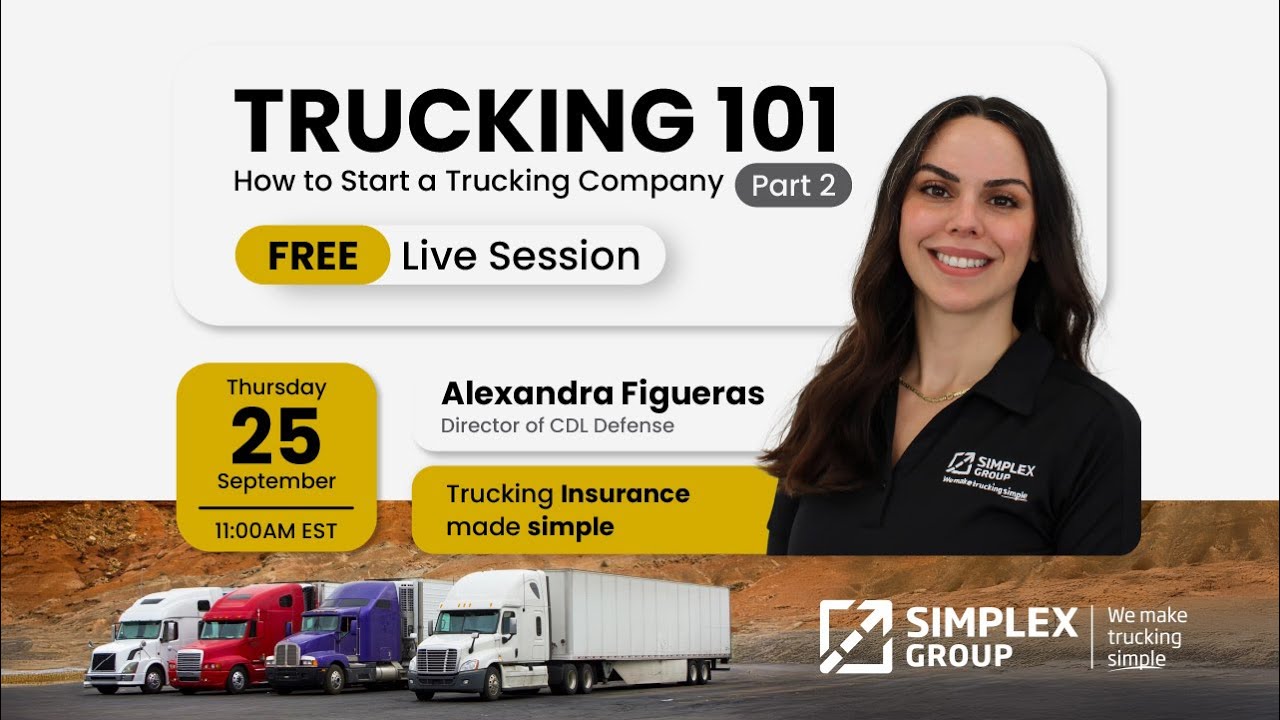
- This webinar page explains why insurance is one of the biggest hurdles for new trucking companies, especially because first-year carriers are viewed as higher risk by insurers.
- It breaks down the quoting process, the core policies new carriers usually need, and why authority activation can take time even after coverage is bound and filed.
- The main takeaway is simple: new carriers need to plan for higher premiums, down payments, and stricter underwriting, while using safety, claims control, and gradual growth to reduce costs over time.
Table of Contents
Insurance is one of the biggest hurdles for new trucking companies. Without the right coverage, your authority cannot go active, and without proper planning, premiums can reduce your profits before you even book your first load.
In part two of our Trucking 101 live session, Alexandra Figueras, Director of CDL Defense at Simplex Group, explained the insurance requirements, quoting process, and strategies new carriers need to understand before launching their trucking business.
Here are the key takeaways.
Why Insurance Costs More for New Carriers
Insurance for first year carriers is considered high risk because there is no operating history to evaluate. This leads to higher premiums, larger down payments, and stricter underwriting.
Rates are affected by:
- Federal minimums versus broker requirements (most shippers demand $1M in liability, not just $750k)
- Cargo type and operating radius
- Driver experience and MVR history
- Overall company safety profile
Many new carriers can expect annual premiums of $10,000 to $20,000 or more per truck.
The Quoting Process Explained
Getting a trucking insurance quote involves several steps:
- Submit company, driver, and equipment information to your agent
- Insurance markets underwrite your application
- Review and compare coverage, deductibles, and premiums
- Select and bind a policy by paying the down payment (typically 20 to 25 percent)
- Insurer files proof of coverage with FMCSA, which can take up to 25 days before your authority becomes active
Essential Insurance Policies for Trucking Companies
According to Alexandra, every new carrier should be prepared for these core policies:
- Auto Liability: required, minimum $750k, but most brokers demand $1M
- Motor Truck Cargo: protects customer freight, usually $100k or more
- Physical Damage: covers your equipment from accidents or theft
- General Liability: protects against non driving business risks ($1M/$2M aggregate typical)
Optional policies may include Trailer Interchange, Excess Cargo, or Towing and Storage depending on your operations.
Can Insurance Be Cheaper in Certain States
The short answer is no. Insurance must be written in the state where your company is domiciled. Premiums are based on:
- Driver records and experience
- Cargo and type of operations
- The company’s overall safety history
There is no way to reduce costs by registering in a different state. Insurers generate quotes based on risk, not location alone.
How to Lower Premiums as a New Carrier
Alexandra shared three guiding principles for reducing costs over time:
- Safety: keep a clean record, no violations, no preventable accidents
- Claims: avoid unnecessary claims through driver training and equipment maintenance
- Growth: expand gradually, since rapid fleet growth raises concerns with insurers
Additional strategies include using telematics, enforcing safety policies, and documenting preventive maintenance.
Simplex’s Insurance Checklist for New Trucking Companies
- Prepare driver, company, and equipment details before requesting quotes
- Budget for a 20 to 25 percent down payment on your first policy
- Secure Auto Liability, Cargo, Physical Damage, and General Liability coverage
- Plan for authority activation to take up to 25 days after filing
- Focus on safety and compliance from day one to lower future premiums
📺 Watch the Full Webinar
Full Q&A: Answered and Unanswered Questions
Want to see all the questions we covered during the webinar—plus the ones we didn’t have time for?
👉 View the complete Q&A list here.
Ready to Get Insured & Start Running
Insurance is one of the most complex steps in starting a trucking company, but it does not have to stop your progress. Simplex Group helps carriers with insurance, DOT compliance, and authority packages so they can launch with confidence.