Commercial Dump Truck Insurance
- Commercial dump truck insurance is not just about buying liability coverage; it is about matching your policy to your operation, risk profile, authority, and jobsite exposure.
- Your premium depends on factors such as truck type, cargo, driving history, operating radius, inspection record, business location, and coverage limits.
- The right insurance decision should support both protection and compliance, especially if you operate under your own authority or manage a growing fleet.
Commercial dump truck insurance is specialized coverage for businesses that use dump trucks to haul dirt, sand, gravel, rock, debris, or similar materials as part of their operations. It is designed to protect owner-operators, trucking companies, and fleets against financial losses tied to accidents, vehicle damage, liability claims, and other exposures common in dump truck work.
For serious operators, insurance should never be treated as a stand-alone purchase. It has to align with how the business actually runs: who drives the truck, what materials are hauled, whether the company operates under its own authority, how safety is managed, and how well compliance is maintained. That is where many businesses make expensive mistakes.
At Simplex Group, we have spent more than 25 years helping trucking entrepreneurs launch, grow, and stay compliant nationwide. From compliance and permitting to insurance and safety, Simplex Group keeps operations running smoothly so carriers can focus on the road ahead.
That broader perspective matters because a dump truck operation is not protected by a policy alone. It is protected by the way insurance, compliance, safety, and operational discipline work together.
Every coverage, one broker
Liability, cargo, physical damage and more — quoted and placed under one roof.
Insurance + DOT + permitting
Filings, certificates and FMCSA compliance handled in-house.
Simplex Group at a glance
What is commercial dump truck insurance and who needs it?
Commercial dump truck insurance is a form of commercial truck insurance built for dump trucks used in business operations. It is commonly relevant for owner-operators, for-hire truckers, contractors, fleets, and businesses in construction, landscaping, debris hauling, manufacturing, and related sectors. Competitor pages consistently frame it this way, with coverage tailored to trucks hauling dirt, sand, gravel, rock, and similar materials.
This type of policy matters because dump trucks face a different risk profile than standard business vehicles. They may operate on job sites, carry heavy shifting loads, work in mixed on-road and off-road environments, and expose the business to larger property damage and bodily injury claims if an accident occurs.
In practice, the businesses that most often need this coverage include:
- Independent owner-operators
- Fleets running local or regional dump trucks
- Construction companies
- Landscaping and excavation companies
- Debris and aggregate haulers
- Specialized trucking operations that move materials to and from jobsites
A common mistake is assuming that “truck insurance” is enough as a generic category. It is not. The policy has to reflect the real operation, because the underwriting logic for a dump truck is shaped by how the unit is used, what it carries, where it operates, and how the company manages risk.
That is one reason operators work with Simplex Group. Our experts handle compliance, permitting, and tax reporting, while Simplex Insurance helps clients secure coverage for unexpected events along the way. Instead of treating insurance as a disconnected transaction, we help operators make coverage fit the reality of their business.
What does a dump truck insurance policy typically cover?
A commercial dump truck policy usually starts with core liability protection and can be expanded with additional coverage depending on how the truck is owned, financed, leased, and used. Across competitor pages, the most frequently cited coverages are liability, physical damage, medical payments, uninsured motorist, and cargo-related protection.
Common coverages at a glance
| Coverage | What it generally helps with | Why it matters for dump trucks |
| Primary liability | Bodily injury or property damage you cause to others | Essential for protecting the business from third-party claims |
| Physical damage | Repair or replacement of your truck after a covered loss | Important for financed, leased, or high-value units |
| Medical payments | Medical expenses for you or passengers after an accident | Useful when injuries occur during vehicle-related incidents |
| Uninsured/underinsured motorist | Damage or injury caused by a driver with little or no insurance | Helps close a common financial gap |
| Motor truck cargo or related protection | Damage to covered materials or transported property, when applicable | Can matter depending on the operation and policy structure |
Not every dump truck operation needs the same mix. A one-truck owner-operator with a financed unit and local routes may need a different structure than a multi-truck fleet with broader contracts and stricter insurance requirements from shippers or contractors.
This is where operators benefit from specialist guidance. At Simplex Group, we understand that every carrier operates differently. That is why our support model is built around the actual needs of the operation rather than a one-size-fits-all approach.
Some businesses need a self-service structure with strong visibility into their documents and status. Others need on-demand support. Others need full management. The insurance conversation should follow the same logic.
How much does commercial dump truck insurance cost?
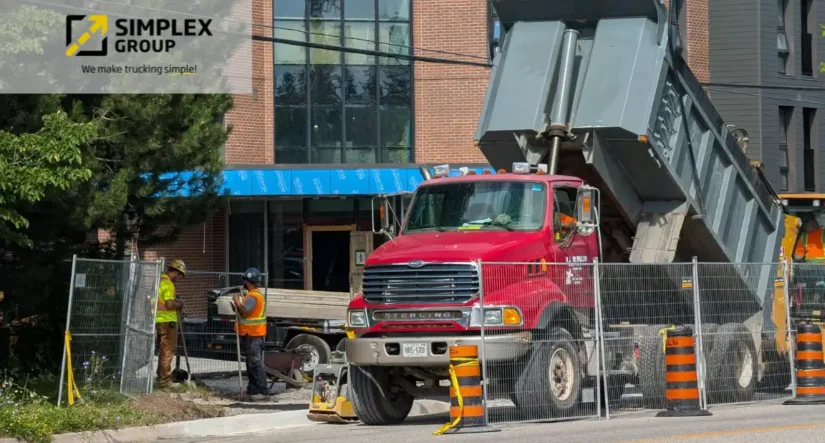
There is no single national price for every dump truck operation, but the market consistently shows that commercial truck insurance is highly variable and based on risk exposure.
That matters because many searchers ask “How much is dump truck insurance per month?” are really asking a better question: what will my operation look like to an underwriter?
Main cost drivers
| Cost factor | Why does it affects premium |
| Truck type and size | Heavier or more specialized units can create higher severity exposure |
| Cargo or materials hauled | Certain loads raise risk due to value, handling, or jobsite conditions |
| Driving history | Clean records generally help; violations and claims increase risk |
| Inspection history and compliance profile | A weaker safety record can make the operation less attractive to insurers |
| Operating radius | Local, regional, and broader operations create different exposures |
| Business location | State rules, claim trends, and territory risk influence pricing |
| Coverage limits and deductibles | More protection typically means a higher premium |
| Ownership structure | Owned, financed, leased, or fleet-managed equipment changes the policy design |
Our programs at Simplex help fleets stay compliant with FMCSA regulations, reduce risk, and improve safety performance. From driver qualification file management and CSA monitoring to mock audits and HOS management, the goal is not just to stay organized. The goal is to operate in a way that supports a stronger risk profile over time.
Insurance, filings, and FMCSA compliance: what operators often overlook
One of the biggest blind spots in this topic is that many operators treat insurance as a policy problem when it is often also a compliance and authority problem.
FMCSA states that it will not grant operating authority registration until the required minimum financial responsibility is on file, and proof of insurance is typically filed using forms such as BMC-91 or BMC-91X. FMCSA also explains that the MCS-90 is a federal endorsement required under 49 CFR § 387.15.
For dump truck operators, that creates a practical distinction:
- If you operate under your own authority, insurance may have to support filings and registration requirements.
- If you are leased to a motor carrier, some core liability obligations may be handled differently depending on the arrangement.
- If you run a fleet, the insurance decision has to be coordinated with ongoing compliance processes, safety controls, and documentation quality.
This is why the insurance conversation should never be isolated from the compliance conversation. At Simplex Group, we do not separate those realities. Our Compliance Suite offers three levels of support designed around how each carrier wants to operate: self-service through the Simplex Hub, on-demand support through the Essentials Program, or full-scale management through a Dedicated Account Manager in the Managed Program.
That structure matters because compliance gaps do not stay in one box. Weak driver files, poor HOS controls, missed filings, or unmanaged safety patterns can create broader business risk. The more complex the operation becomes, the more important it is to connect coverage, compliance, and safety into one operating model.
How to choose the right policy for an owner-operator or fleet
The right policy is the one that matches the actual business model—not just the cheapest quote on the screen.
A practical selection process
- Define the operation clearly: start with the basics: are you an owner-operator, a leased-on driver, a company operating under its own authority, or a multi-unit fleet? The right answer shapes liability expectations, filings, and how underwriters view your business.
- Map the exposure: look at where the trucks operate, what they haul, how often they enter jobsites, whether the units are financed, and whether drivers are employees or owner-operators.
- Separate “required” from “smart to add.”: liability is often the foundation, but many operations also need physical damage and other protections depending on truck value, contracts, and risk tolerance.
- Review the compliance side before buying: if the operation has authority, filings, safety, or documentation issues, solve those early. A policy can help protect the business, but it does not fix weak operational controls.
- Choose support, not just a premium: a low rate is not always a good rate if the policy is poorly aligned with the business or if no one is helping you stay organized.
Simplex Group is built for operators who want broader support. Our divisions work together so clients can get help with compliance, permitting, tax reporting, freight planning, factoring services, and insurance. That integrated model is valuable because growing a trucking business is not only about getting insured. It is about building an operation that can stay on the road safely and confidently.
Is owning a dump truck profitable after insurance and compliance costs?
Yes, owning a dump truck can be profitable, but only when operators price jobs correctly, control downtime, manage insurance and compliance costs, and run with discipline.
Insurance is part of profitability, not separate from it. The same is true of permitting, tax reporting, safety management, and compliance readiness. A business that underprices risk can win short-term work and still lose money over time. A business that treats compliance as an afterthought may end up paying for it through disruptions, weaker insurability, preventable penalties, or poor operational performance.
That is why experienced operators focus on total business health:
- Revenue per truck
- Utilization and route quality
- Claims history
- Driver performance
- Maintenance discipline
- Documentation readiness
- Safety and compliance consistency
Simplex Group serves independent and ambitious entrepreneurs who want to build a better future for themselves and their families. We believe trucking success is possible, and we want to help make it happen. When clients succeed, we succeed. That mindset shapes the way we support carriers: not with isolated services, but with a system that helps them launch, scale, and stay compliant.
Not just a quote form that disappears
You get a real broker who knows trucking and handles the whole lifecycle — quote, bind, filings, renewals.
25+ years, 10,000+ trucking companies
A book built over decades — carriers pick up when we call, and you get real market options, not one quote.
One broker for everything
Insurance, DOT compliance, and permitting under one roof — not four vendors and a spreadsheet.
Real agents, fast quotes
Give us the basics once; a licensed agent comes back with real numbers — not a call-center loop.
Annual reviews, always
Your business changes and grows — we recommend a yearly policy review so you're never paying for coverage that no longer fits your operation.
Frequently asked questions
<strong>How much is dump truck insurance per month?</strong>+
There is no fixed universal monthly rate, but commercial truck insurance pricing varies based on truck type, cargo, driving history, operating radius, inspection record, location, and coverage limits. Market benchmarks for commercial truck insurance show wide monthly variation rather than one standard dump truck price.
<strong>What kind of insurance does a dump truck need?</strong>+
Most dump truck operations start with liability coverage and then add other protections based on the business model, vehicle value, financing, route exposure, and contractual requirements. Physical damage, uninsured motorist, and medical payments are commonly considered options.
<strong>How much does a $1,000,000 liability insurance policy cost?</strong>+
There is no single answer for trucking because premium depends on risk class, operations, location, and claims profile. A commonly cited small-business general liability benchmark from The Hartford is $69 per month for a $1 million policy, but that figure is not a trucking-specific dump truck rate and should not be used as a direct proxy for commercial dump truck insurance.
<strong>Do dump truck owner-operators need FMCSA filings?</strong>+
Operators under their own authority often need proof of insurance filed with FMCSA before authority is granted, typically through BMC-91 or BMC-91X, depending on the setup.
Other services
Simplex Group is a full-service trucking partner — insurance is one piece of a much larger toolkit.