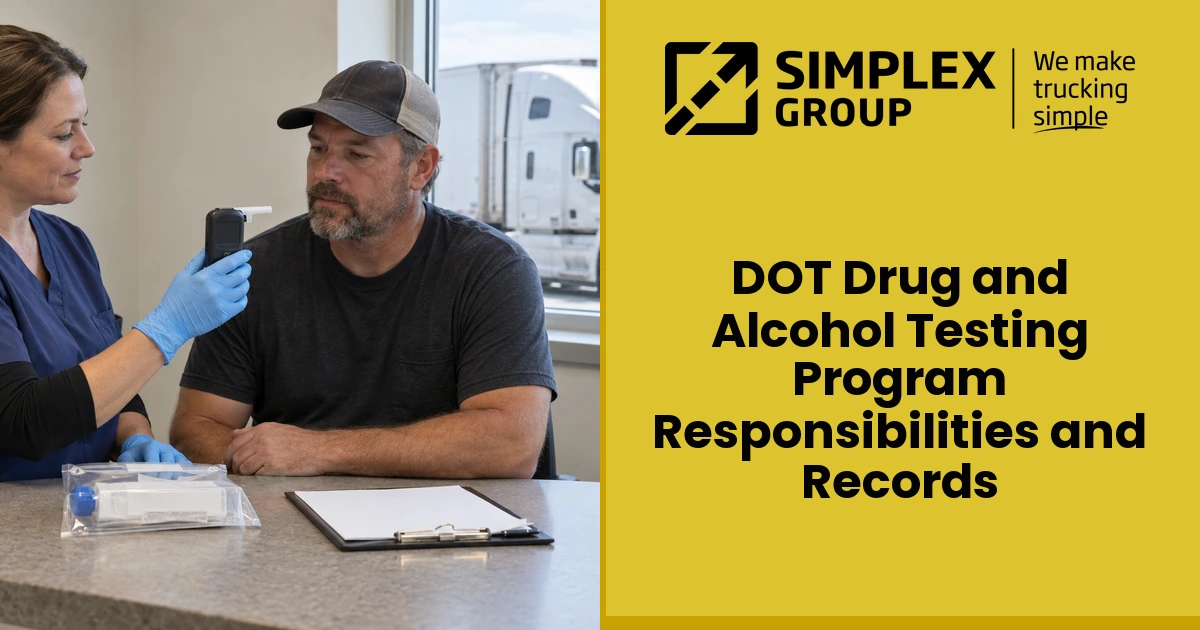
- A DOT drug and alcohol testing program can involve collectors, laboratories, MROs and third-party administrators, but the employer still needs a clearly defined internal path for receiving information and making required operating decisions.
- Each testing workflow should identify who triggers the task, coordinates collection, receives official information, makes the employer’s duty-status decision, performs required reporting and retains the evidence.
- Clearinghouse tasks should be tracked separately from testing, while operational trackers should avoid unnecessarily exposing sensitive testing information. Records also need to follow the applicable retention requirements rather than a single deletion schedule.
Table of Contents
A testing program can involve a collector, laboratory, medical review officer and third party administrator. That creates several handoffs before the carrier receives the information it needs to make an operating decision.
The employer needs to know who initiates the task, who receives the result and who acts on it. A vendor agreement alone does not answer those questions.
A DOT drug and alcohol testing program is the set of testing, reporting, education and recordkeeping activities applicable to covered drivers under the governing DOT and FMCSA rules. This guide focuses on assigning and documenting that work. It does not replace the regulations or provide a detailed timetable for every testing event.
Keep employer decisions inside the employer
FMCSA explains that service agents can administer parts of the program, while the employer retains responsibility for compliance. A consortium or third party administrator cannot serve as the employer’s designated employer representative, or DER.
The DER is an employee authorized to take the employer actions required by the program, including decisions associated with removing an employee from safety sensitive duties. Choose someone who is reachable during the hours your operation actually runs. Define a backup arrangement consistent with the role and the employer’s procedures.
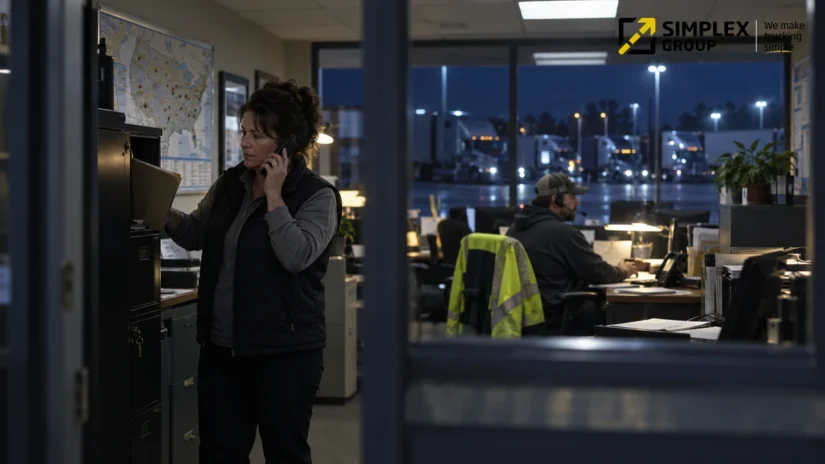
I would document the decision route before reviewing the technology. If a time sensitive notification arrives during an evening shift, the collector and dispatch team should know which employer contact can act.
Owner operators have specific program arrangements, including consortium requirements in applicable circumstances. Do not assume a larger employer’s role chart can be copied unchanged into a one person operation.
Map the handoffs for each type of task
Create a short workflow for hiring, random selection, event driven testing and return to duty or follow up activities where applicable. The trigger and decision owner can differ, even when the same provider handles the collection.
For each workflow, identify:
- Who determines that the applicable task must begin.
- Who instructs the driver and coordinates the collection.
- Who receives the official result or other required notification.
- Who makes the employer’s duty status decision.
- Who performs any required reporting and retains the evidence.
Keep dispatch’s information limited to what it needs to manage the assignment. Detailed results should move through authorized channels with the confidentiality protections that apply to the records.
Ask the provider to walk through an incomplete collection or a result that needs review. A real program must explain how exceptions are handled. A workflow that only works for an uncomplicated negative result leaves important operating questions unresolved.
Treat the Clearinghouse as its own workstream
Testing and Clearinghouse compliance are connected, but their evidence is different. A test result does not demonstrate that a required query was performed with the appropriate consent. A query does not replace a required test.
Use the FMCSA employer Learning Center to confirm the current query, consent and reporting responsibilities. Record who initiates a query, who obtains the required consent, who reviews the response and who resolves an incomplete task. Designate a C/TPA correctly before relying on it to act on the employer’s behalf.
Avoid a generic tracker label such as “Clearinghouse done.” A useful completion record identifies the task, its date and the evidence available to authorized staff. It also makes unresolved consent or reporting questions visible to the person responsible for resolving them.
Keep the working tracker separate from sensitive records
The operating tracker can show that an authorized review is pending, identify the DER and indicate whether a driver is available for assignment. It does not need to display detailed test results to every employee who manages schedules.
Store records according to their category and required retention period. 49 CFR 382.401 sets different retention requirements for different records. A single rule that deletes everything after one year will not support the whole program.
Use individual accounts and role based access. When a provider or employee changes, review the permissions and the location of the evidence. The carrier should be able to retrieve its records without depending on a former staff member’s personal inbox.
Review the exceptions that expose process gaps
At a regular management review, examine tasks without confirmed completion, notices without a documented response and records that cannot be retrieved. Ask what prevented closure and whether the same issue appears elsewhere.
A practical review might uncover a notification sent to an employee who changed roles. The corrective action should update the provider contact, the internal workflow and the backup arrangement. Closing only the individual alert would leave the same failure available to happen again.
For a growing fleet, the most useful improvement is often a clearer handoff. Simplex Group’s substance abuse testing support can be part of that discussion. The employer still needs a defined route from program information to an authorized decision.
FAQs
Who is responsible for a DOT drug and alcohol testing program?
The employer remains responsible for compliance even when service agents administer portions of the program. A collector, laboratory, MRO or C/TPA can perform specific functions, but outsourcing those activities does not transfer the carrier’s overall responsibility.
What is a Designated Employer Representative (DER)?
The DER is an employee authorized to take employer actions required under the testing program, including decisions associated with removing an employee from safety-sensitive duties. The document recommends selecting someone who can actually be reached during the fleet’s operating hours and establishing an appropriate backup arrangement.
Can a third-party administrator serve as the employer’s DER?
No. The document notes that a consortium or third-party administrator cannot serve as the employer’s DER. The DER is an employee authorized to make the required employer decisions.